The Riace Bronzes: their discovery
We all have the Riace Bronzes in mind, true symbols of Calabria and Magna Graecia. But how much do we really know about these extraordinary statues?
Every time their discovery is told, it feels like hearing a new story. The finding of the Bronzes has something magical about it, like a legend that never gets old.
Once, two statues lay on the bottom of the Ionian Sea, near Riace, silently waiting for someone to find them. Today, those masterpieces of antiquity can be admired at the National Archaeological Museum of Reggio Calabria.
The story of the discovery of the Riace Bronzes
The discovery of the Riace Bronzes is one of the most fascinating and complex chapters in Italian archaeology.
It’s 16 August 1972, the height of summer. Stefano Mariottini, a young Roman diver on holiday in Calabria, is exploring the seabed about 300 metres from the coast of Riace, at a depth of 8 metres. At a certain point, he catches sight of something unusual: two large nude statues lying on the sandy bottom. He immediately alerts the Superintendency and, from that moment, an adventure begins that would go down in history.
Those statues, immediately nicknamed “the heroes who came from the sea”, turn out to be two bronze colossi from the Greek era, apparently in good condition. But recovering them is no easy task: they are heavy, fragile, losing fragments, and their extraction from the sea is full of difficulties. There is no shortage of controversy: some claim they were discovered by others, while some put forward theories about their past and the possibility that they were part of a stolen cargo.
What is certain is that the Bronzes need immediate care. After recovery, they are transferred to Florence, to the Opificio delle Pietre Dure, where they remain from 1975 to 1980 for a delicate restoration. Here the marine encrustations and casting earth are removed, bringing each statue down from an initial 400 kg to about 160 kg.
Their stay in Florence, however, sparks a heated debate: the Bronzes risk never returning to Calabria, becoming the subject of a long dispute between institutions. In the end, however, they return to their homeland, where today they are preserved and displayed at the National Archaeological Museum of Reggio Calabria.
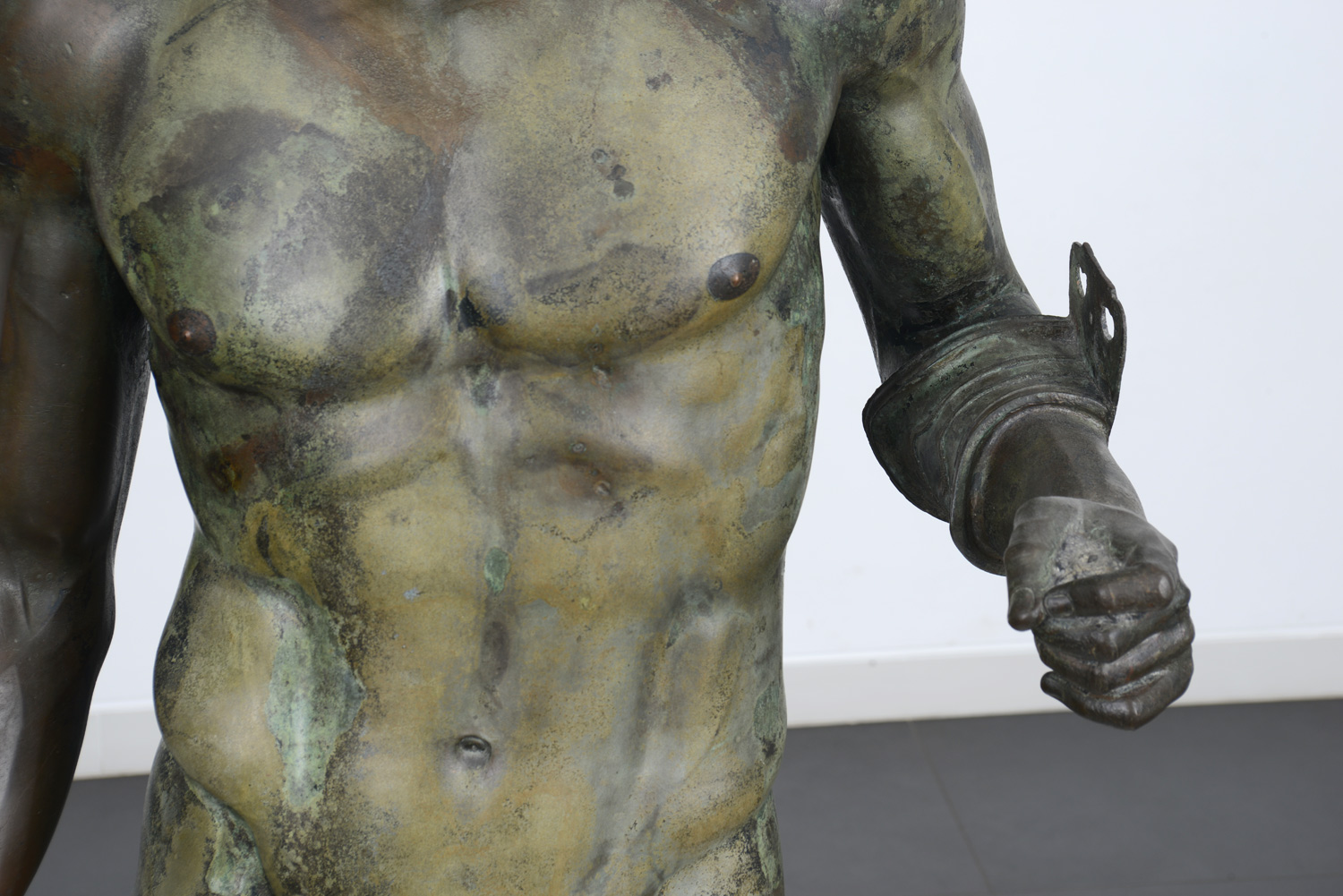
The second restoration, carried out between 1992 and 1995 in Reggio Calabria by specialists from the then Central Institute for Restoration (ICR), proved as delicate as it was essential to ensure the long-term conservation of the Riace Bronzes. The work not only allowed for better protection but also contributed to a deeper understanding of the statues.
After being shown to the public for the first time in 1981 at the National Archaeological Museum of Reggio Calabria, the Bronzes were placed on anti-seismic bases and set in a controlled environment, specially designed to preserve their integrity.
Where the Riace Bronzes aretoday
National Archaeological Museum of Reggio Calabria
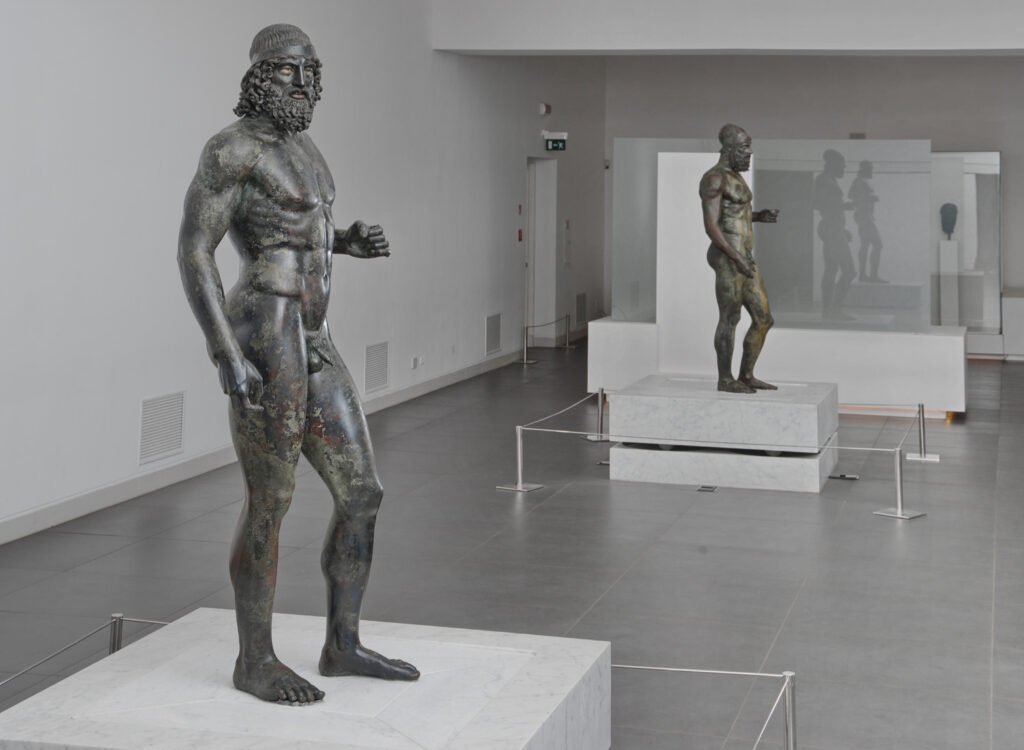
The Riace Bronzes are currently displayed at the National Archaeological Museum of Reggio Calabria, in a modern space designed to protect them as best as possible, given their extreme fragility.
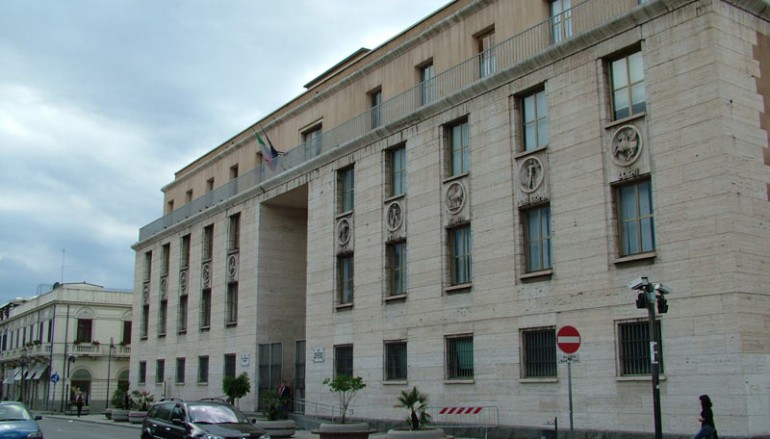
During the renovation work on the historic Palazzo Piacentini in Piazza De Nava, a third restorationwas carried out, focused mainly on the surfaces of the statues. They are now on the ground floor of the museum, in a specially climate-controlled room. Before entering, visitors must pass through a pressure-equalising chamber, which reduces the entry of smog and impurities to protect the environment in which they are kept.
What the Riace Bronzes represent
The heroic nudity
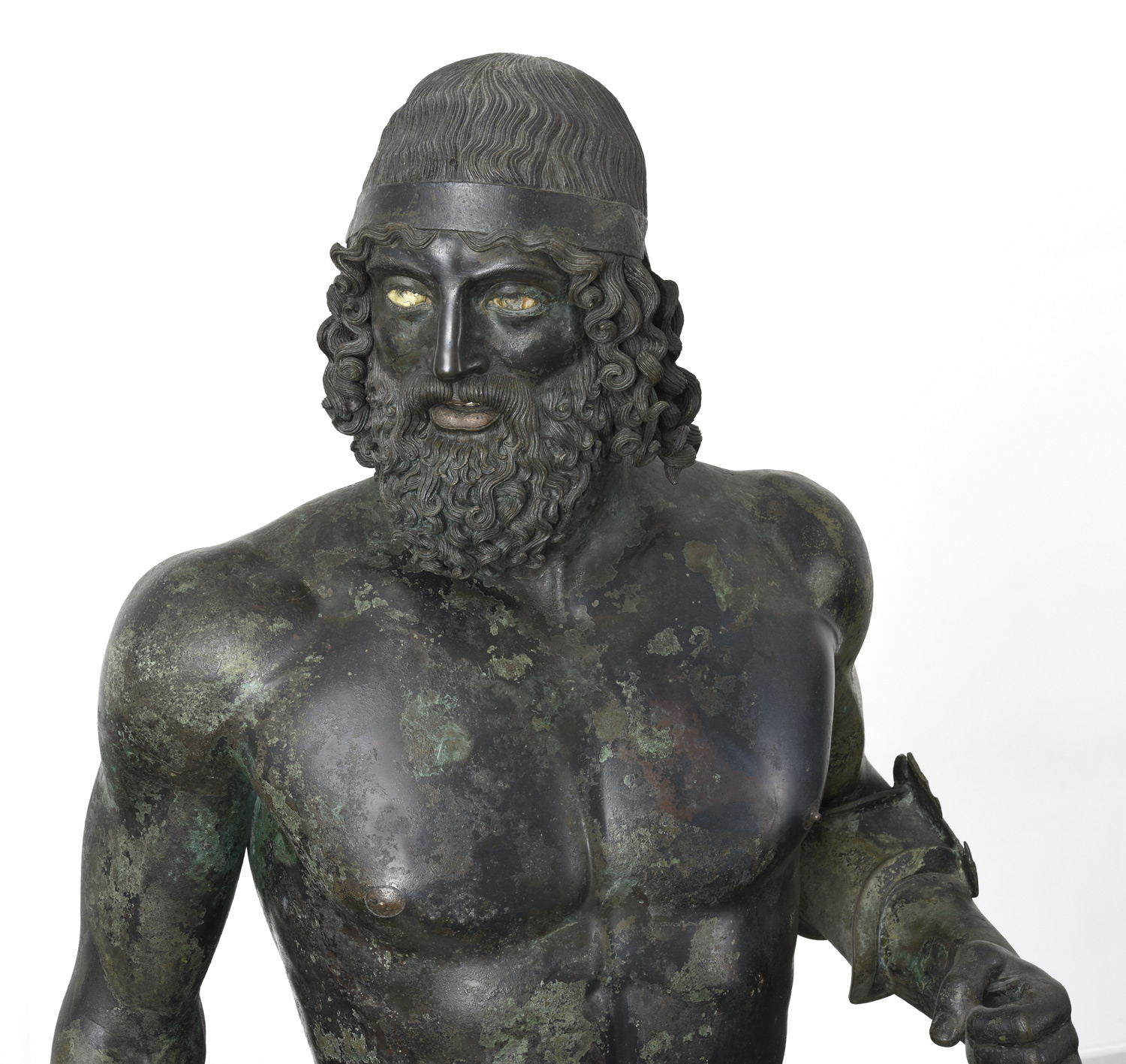
The Riace Bronzes are two bronze statues depicting nude warriors, according to the ideal of “heroic nudity” in Greek art. They stand 1.98 and 1.97 metres tall respectively and weigh about 160 kg each.
The two figures are commonly referred to as Statue A (“the Old Man”) and Statue B (“the Young Man”). Their identification as warriors comes from their posture and reconstructed elements: a shield in the left hand, a spear in the right and, probably, a helmet.
The anatomical details are extremely realistic: raised veins on hands and feet, mother-of-pearl eyes and separately applied nipples using a hammering technique.
Posture and style
The Bronzes show a perfect balance between tension and relaxation
From a static point of view, the Bronzes show a perfect balance between tension and relaxation, following a crossed scheme: the body weight rests on the straight right leg, while the left is bent forward. This is matched by an opposite balancing of the arms: the left is bent, the right lowered.
Origin and dating
Thanks to archaeometric studies, it has been established that the Bronzes were made around the mid-5th century BC, most likely in Argos, Greece. It is believed they were being shipped towards Rome by boat, probably as spoils or ornaments for a public building, but that the journey ended in a shipwreck in Calabrian waters.
Curiosities and theories
According to some theories, the two statues were not isolated, but were part of a larger group. One very intriguing theory links them to the myth of the Seven Against Thebes, and in particular to the brothers Eteocles and Polynices, sons of Oedipus, known for killing each other in battle.
Pianifica il tuo viaggio alla scoperta delle meraviglie della Calabria. Dopo un’immersione tra i fondali di Scilla, Tropea o dell’Isola di Dino, concediti del tempo per esplorare anche le spiagge più belle della regione, dalle iconiche distese di sabbia della Costa degli Dei fino al fascino selvaggio dell’Arcomagno.
Inizia subito a pianificare la tua avventura! La tua indimenticabile vacanza in Calabria è a pochi clic di distanza! Se hai dubbi o desideri consigli per organizzare al meglio la tua vacanza, lo staff di Airone Residence a Zambrone sarà lieto di aiutarti.